 Alejandro Ferradas

Imagine standing at the edge of a cliff, the ocean breeze sharp with salt, waves thundering against the rocks below. The sky opens before you, endless and alive with possibility. You close your eyes, and in that stillness the world shifts. The wind feels like your breath, the waves move with your pulse, and your thoughts stretch outward, mingling with the universe as if you were whispering to the stars. Then you blink, and you are a single figure again in a vast cosmos.
What if that moment of unity was real? What if your consciousness extends beyond your skull and is woven into the fabric of reality itself?

This question has echoed through human history, and today it finds new resonance in quantum physics. Is the mind a flicker of neurons, or is consciousness something as fundamental as gravity, shaping the universe as much as it is shaped by it? This journey brings together leading science and ancient wisdom. It is less about equations and more about you, me and the cosmos we share.
The Quantum Revolution: A Dance Beyond the Clock
For centuries the universe was seen as a machine, a cosmic clock ticking with Newtonian precision. Then the twentieth century arrived, and quantum physics revealed that at the scale of atoms, reality dances.
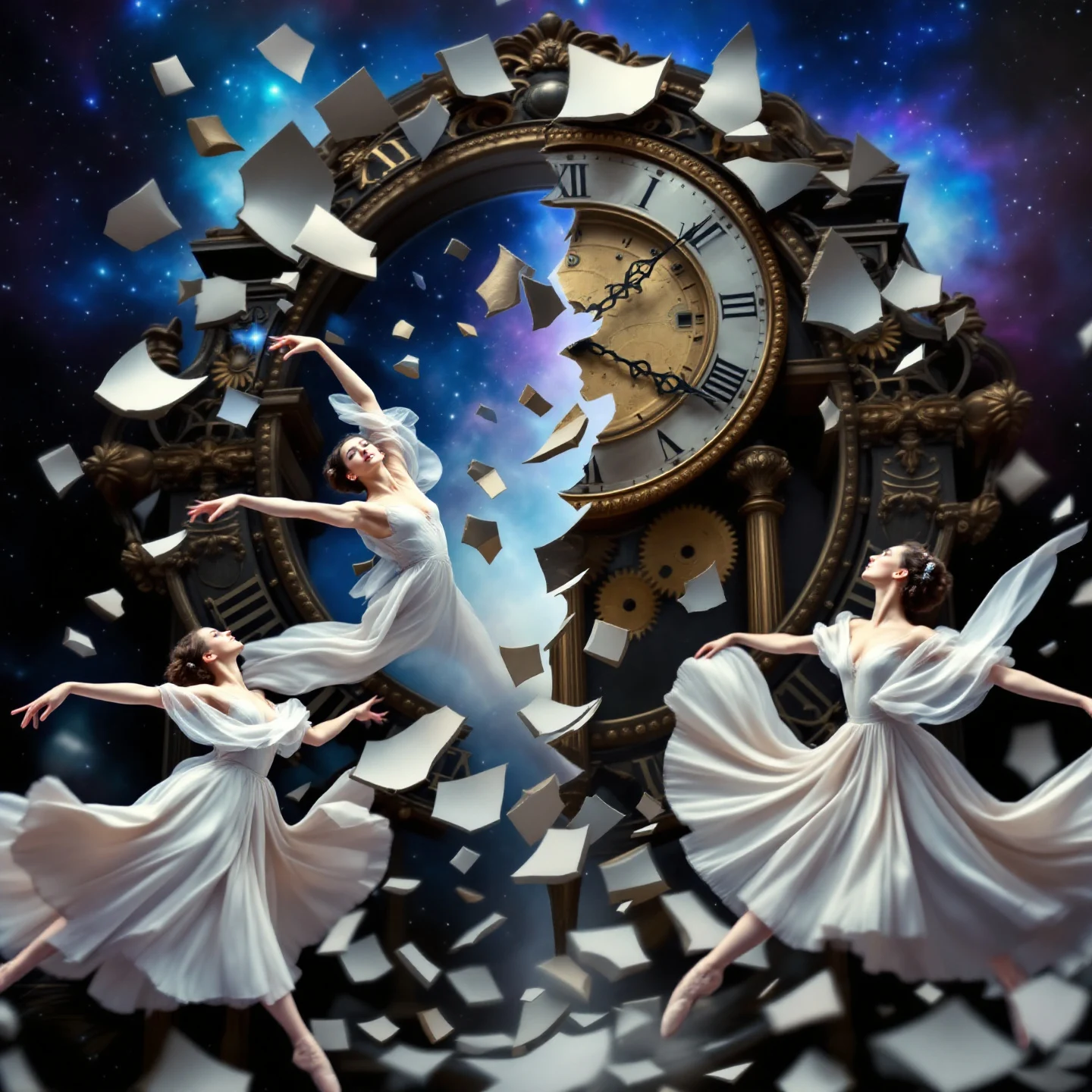
Three quantum marvels rewrote the rules:
Wave particle duality. In the double slit experiment, electrons sent toward two openings spread like waves and create a pattern of interference stripes, as if each one passed through both slits at once. When the experiment records which slit each electron passes through, the stripes disappear and the electrons behave like particles. Reality responds to how it is observed.
Superposition. Picture a spinning coin, heads and tails at once until it lands. Quantum particles live in this state of many possibilities, spin up and spin down, here and there, until they are measured. Schrödinger's famous cat, both alive and dead inside its box, captures the paradox. The universe hums with what could be, waiting to become what is.
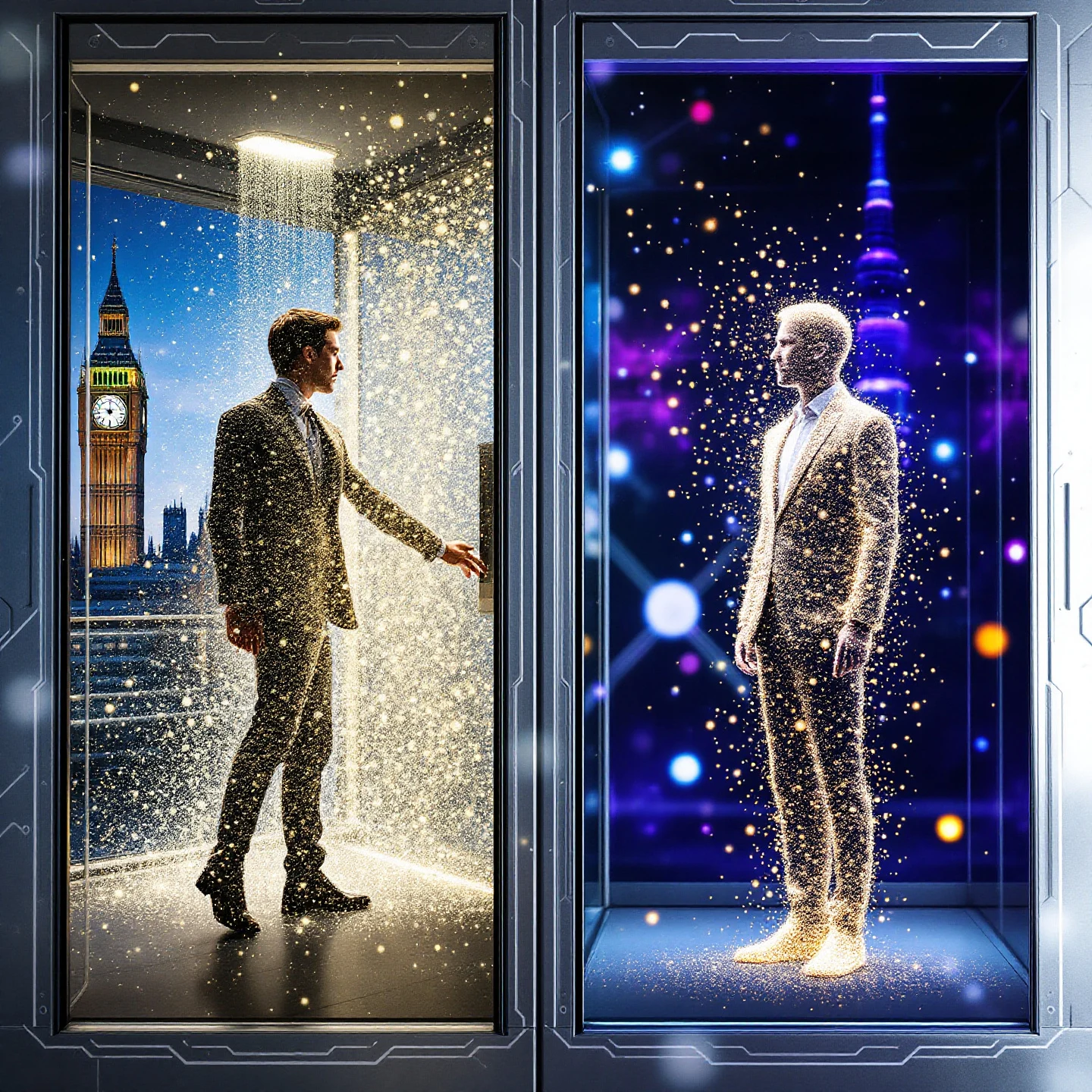
Entanglement. Think of two dancers on different continents moving in perfect harmony. Entangled particles share this kind of bond: measure one, and the result for its twin is correlated instantly, at any distance. Einstein called it "spooky action at a distance." In 1964 John Bell proposed a way to test it, and experiments by John Clauser, Alain Aspect and Anton Zeilinger confirmed it, earning them the 2022 Nobel Prize in Physics. Their work shows that the connection cannot be explained by hidden local instructions carried by each particle. The two remain one system across space.
These discoveries now power real technology: lasers, quantum computers built on qubits in superposition, quantum cryptography that reveals any eavesdropper, and quantum teleportation of information.
Quantum Field Theory goes further. It describes particles as ripples in vast fields that fill all of space: the electromagnetic field, the Higgs field and others. Think of the fields as an ocean and particles as its waves. Could consciousness be another ripple in that ocean? Physicist David Bohm proposed an "implicate order," a deeper wholeness in which mind and matter unfold from one source, a vision mystics would recognize.
The Observer Effect: Your Gaze and the World
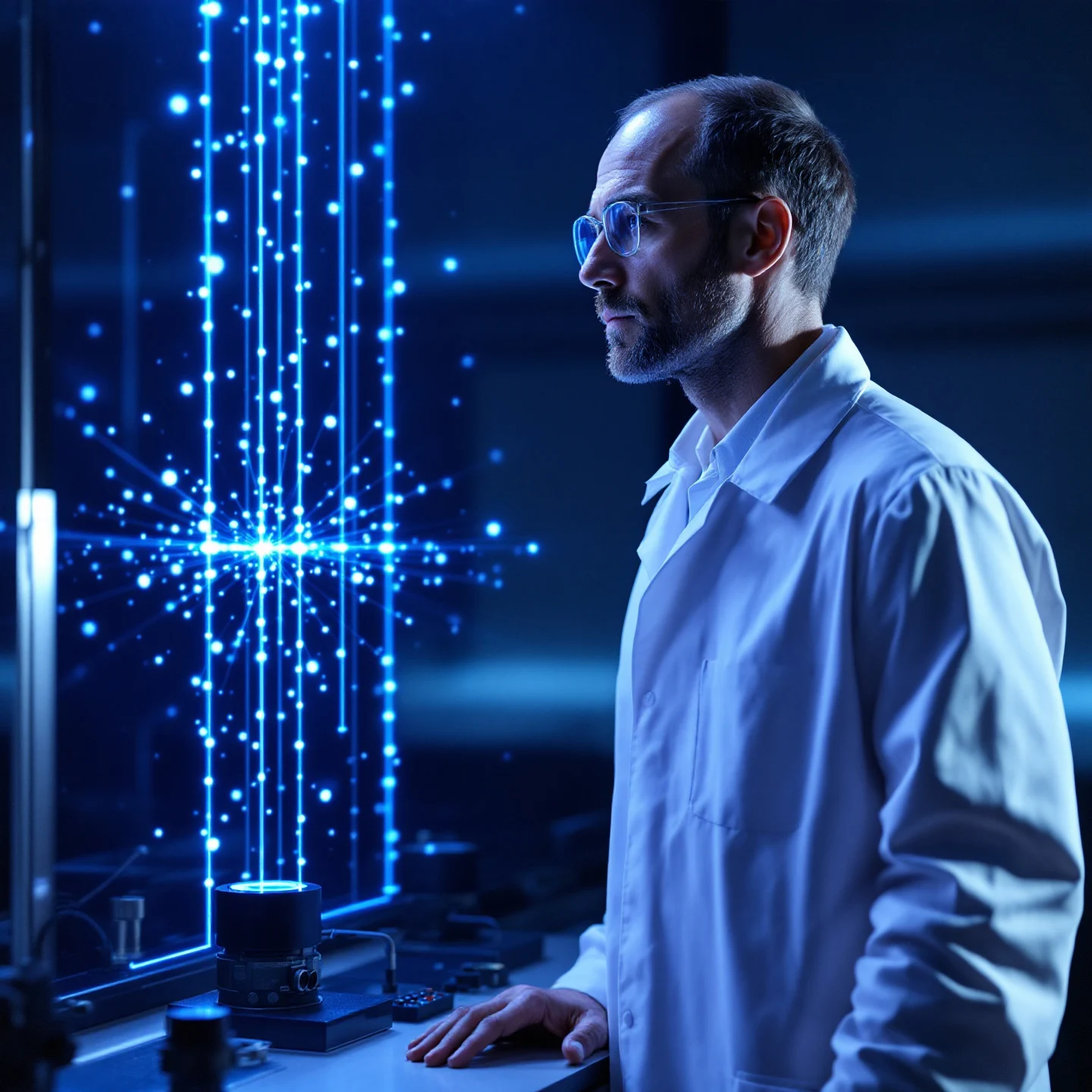
In quantum physics, the act of observation is part of the experiment itself. Whether the double slit pattern shows waves or particles depends on whether path information is recorded. Why does measurement turn a cloud of possibilities into one definite outcome? This is the famous measurement problem, and physicists still debate its answer.
Some interpretations point to decoherence, where the surrounding environment itself settles the outcome. The many worlds interpretation imagines every outcome unfolding in its own branch of reality. John Wheeler offered a third vision, the Participatory Universe, in which observers are essential to bringing reality into being. His delayed choice experiment, confirmed in the laboratory, shows that the way we choose to measure light after it has passed the slits determines whether it reveals wave or particle behavior. Time and observation turn out to be more intertwined than we ever imagined.
Max Planck, the founder of quantum theory, said in a 1931 interview: "I regard consciousness as fundamental. I regard matter as derivative from consciousness." If he was right, you are far more than a passenger. You are participating.
Theories of You: Quantum Minds
Building on the observer effect, several bold theories place the mind at the center of reality:
- Orchestrated Objective Reduction (Orch OR). Sir Roger Penrose and Dr. Stuart Hameroff propose that consciousness arises from quantum processes in microtubules, tiny structures inside brain cells. Research reported in 2014 found resonant vibrations in microtubules, which the authors see as support for the theory. Penrose adds a cosmic dimension: a proto consciousness woven into spacetime itself, flowing through you.
- Analytic idealism. Philosopher Bernardo Kastrup argues that consciousness is primary and matter is its appearance. The universe is one vast awareness, and each of us is an expression of it. This is a modern echo of the mystics.
- It from bit. John Wheeler proposed that reality is built from information, and that every physical "it" arises from the answers to yes or no questions, from observation itself. In his vision, you co-create the universe.
Together these theories turn the observer effect into a story in which you are an essential participant in reality's unfolding.
Entanglement and Unity: One Cosmic Web
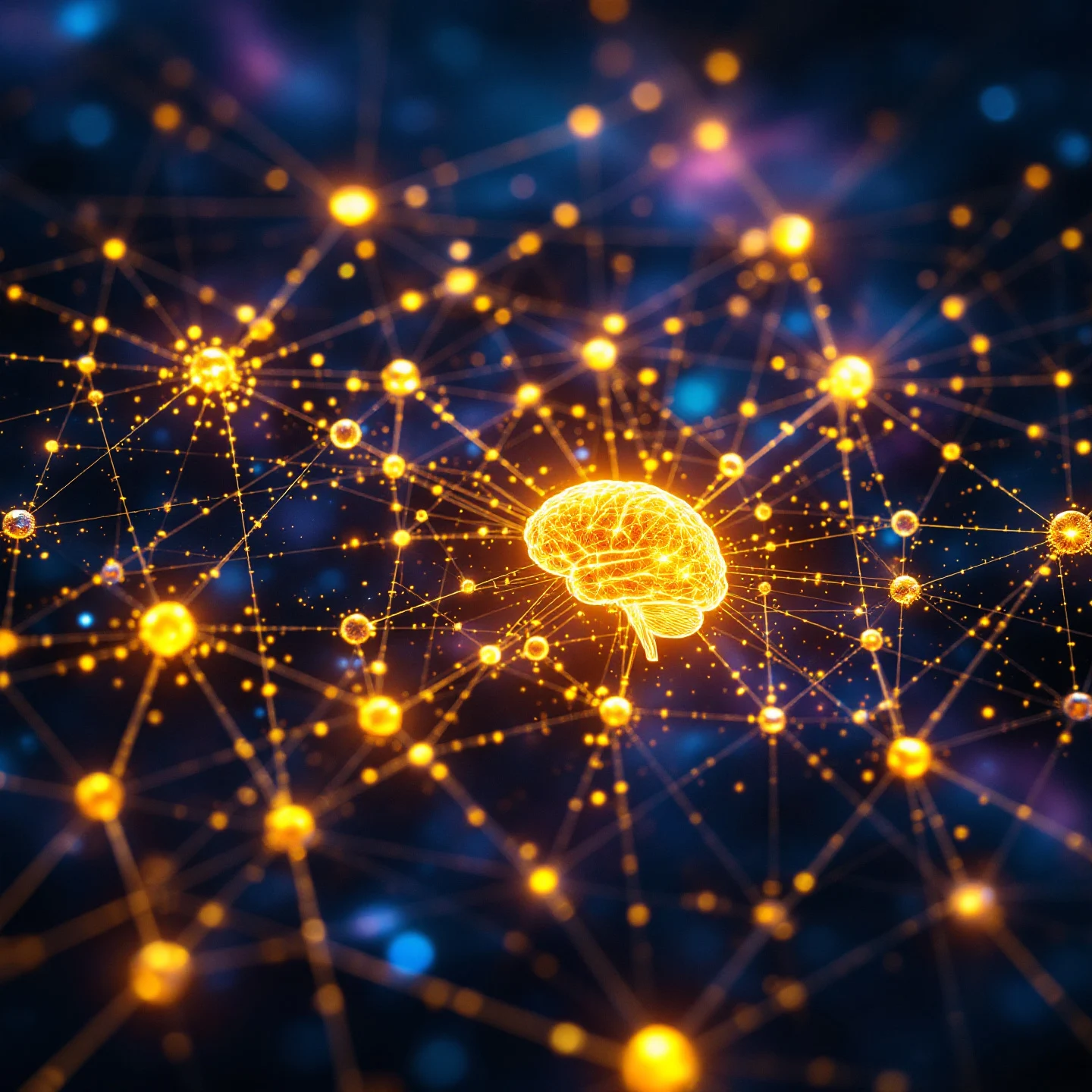
Entanglement offers a glimpse of oneness. Entangled particles behave as a single system, unbound by distance. Scientists have extended entanglement far beyond single particles: in 2011 researchers entangled the vibrations of two diamonds large enough to see with the naked eye, and later experiments entangled tiny vibrating drums and clouds of atoms. Unity appears to reach toward the world we can see and touch.
Could consciousness be the thread weaving this cosmic web? Ancient traditions have long said so, and biologist Rupert Sheldrake offers a modern bridge. Entanglement and his morphic resonance play like an orchestra, each particle and each living being contributing to one deeper harmony.
Rupert Sheldrake: From Laboratory Scientist to Visionary
Rupert Sheldrake earned his PhD in biochemistry at Cambridge University and spent his early career studying plant development. Even then he sensed the limits of a purely mechanistic worldview. How do organisms develop with such precision? Why do some behaviors seem to appear without an obvious cause?
In the late 1970s, while living and working in India, immersed in both research and spiritual practice, Sheldrake began to sense that nature holds a kind of collective memory. This insight became the theory of morphic resonance, a bold blend of biology, physics and philosophy. His ideas challenged the scientific mainstream and opened a door to life's deeper mysteries.
Morphic Resonance: A Field of Shared Memory
Morphic resonance proposes that invisible morphic fields shape the form and behavior of living things. Each species, and even each kind of crystal, has its own field that holds the patterns of everything that came before. These fields connect past and present, allowing each new organism to tune in to the accumulated experience of its kind.
Sheldrake points to examples such as rats learning a new task more quickly in laboratories around the world once others have learned it, and new crystals forming more easily once they have formed somewhere before.
A simple analogy: imagine each species tuned to its own radio station, broadcasting life's instruction manual. A bird building its first nest or a child learning to speak tunes in to that signal. The more a pattern is repeated, the stronger the signal becomes.
Morphic Resonance and Entanglement
Entanglement shows particles linked across distance as one system. Morphic resonance imagines a similar unity in the living world, where behaviors, instincts and even thoughts are connected through shared fields. If entanglement is the physical echo of oneness, morphic resonance may be its biological counterpart. Sheldrake's experiments on the sense of being stared at and on the bonds between pets and their owners explore this possibility, and they continue to spark lively debate. Together, these ideas invite us to see two threads of one cosmic fabric.
Ancient Wisdom, Quantum Echoes
Quantum ideas feel revolutionary, yet they echo insights that contemplatives expressed thousands of years ago.
Vedanta's Brahman and the quantum fields. In the Upanishads, Brahman is the boundless consciousness from which the universe arises and to which it returns. The individual self, Atman, is one with Brahman, a truth captured in the phrase "Tat Tvam Asi," "Thou art That." Quantum Field Theory describes a universe of interwoven fields, with particles as vibrations within them. Both point to a fundamental oneness beneath the appearance of separate things.
Buddhism's web and entanglement. The teaching of dependent origination, Pratītyasamutpāda, holds that every phenomenon arises in relationship with everything else. Entanglement reveals a physical world in which separate things can act as one system. Both show a reality of profound interconnection.
The Tao and the quantum vacuum. The Tao Te Ching, traditionally attributed to Lao Tzu, describes the Tao as the source of all things, "the mother of the ten thousand things": empty yet full of potential, still yet endlessly creative. Physics describes the quantum vacuum in a remarkably similar way: never truly empty, alive with fluctuations, the fertile ground from which matter and energy emerge.
Western voices.
- Plato: in the Allegory of the Cave, prisoners mistake shadows for reality. Quantum physics likewise reveals that our senses perceive only a fraction of a deeper reality.
- Rumi: in Coleman Barks's rendering, "Out beyond ideas of wrongdoing and rightdoing, there is a field. I'll meet you there." A field of pure oneness, where the self dissolves into the divine.
- Meister Eckhart: the fourteenth century Christian mystic described the Godhead as a silent, formless ground beyond all distinctions, and the soul's union with it.
Science and spirit join in one chorus. Quantum discoveries amplify the ancient insight that we are vital notes in the grand harmony of existence.
Your Mind's Power: Painting Reality
If observation plays a role at the quantum level, what might focused intention do? A growing body of research explores this question.
The Global Consciousness Project
Since 1998, the Global Consciousness Project, founded by Dr. Roger Nelson at Princeton, has run a worldwide network of random number generators that produce streams of pure chance. The project looks for moments when these streams become less random during events that unite the attention of millions, such as global celebrations, tragedies and moments of shared prayer. Across more than five hundred formal events from 1998 to 2015, Nelson reported a cumulative deviation from chance of about seven standard deviations, odds of roughly one in a trillion. The project suggests that when we feel and think together, our shared attention may leave a trace in the physical world.
Intention and the Double Slit
Dean Radin and colleagues at the Institute of Noetic Sciences brought intention directly into the double slit experiment. In studies published in the journal Physics Essays beginning in 2012, participants focused their attention on a double slit apparatus, and the researchers reported small, statistically significant shifts in the interference pattern. Their findings suggest that consciousness may interact with quantum systems. Picture your mind as a gentle hand, nudging the threads of possibility.
The Placebo Effect: The Power of Expectation
Closer to home, the placebo effect shows how belief influences the body. In clinical trials, people who receive an inactive pill often improve, sometimes dramatically. A 2010 review in The Lancet described how expectation activates real biological pathways in the brain, including those involved in pain relief. Belief is far more than imagination: it reaches into our biology.
Try It: Focus on Peace and Feel It Spread
Sit quietly and close your eyes. Focus on a feeling of peace. Picture it as a warm glow radiating from you, spreading outward to touch everything around you. Hold that focus for a few minutes and notice how you feel. If collective attention can register in the world, your individual attention sends out its own ripple. You are painting peace into the world.
You Are a Creator
The Global Consciousness Project explores collective attention, Radin's experiments explore intention in quantum systems, and the placebo effect shows belief shaping biology. Together they portray your mind as a creative force. Every thought, intention and moment of focus can be a brushstroke on the canvas of reality. Begin with peace, kindness or hope, and imagine it rippling outward.
Beyond Death: Eternal Awareness?
Does consciousness continue beyond the body? This question has lived in philosophy and religion for millennia, and science is now exploring it directly.
The AWARE II Study
Dr. Sam Parnia, a critical care physician at NYU Langone, led the AWARE II study of people who experienced cardiac arrest in 25 hospitals, mostly in the United States and the United Kingdom. Published in 2023 in the journal Resuscitation, it found that four in ten survivors recalled some degree of awareness during CPR. Among patients whose brains were monitored, nearly 40 percent showed brain activity returning toward normal patterns, at times up to an hour into resuscitation. Survivors described lucid experiences: a sense of separation from the body, a meaningful review of their lives, and a feeling of going home. These findings invite a profound question about how awareness relates to the brain.
Dr. Konstantin Korotkov: The Energy Field at Death
Russian biophysicist Dr. Konstantin Korotkov developed Gas Discharge Visualization (GDV), a modern form of Kirlian photography that images the subtle glow around the fingertips. Applying it to the body after death, he reported that the energy field fades gradually over hours or days rather than disappearing at once. In his book Light After Life, he interprets this as the gradual departure of a non material, informational aspect of the person. For Korotkov, death is a transition.
Orch OR: A Quantum Clue
Penrose and Hameroff's Orch OR theory links consciousness to quantum processes connected with the fabric of spacetime. Hameroff has suggested that if this is so, quantum information could persist beyond the body. The theory is presented as testable and continues to be explored.
Quantum Immortality
Quantum immortality is a thought experiment arising from the many worlds interpretation. In every situation where life could end, some branch of reality continues in which you survive, and your consciousness would always follow that branch. Physicist Max Tegmark, who has discussed the idea, regards it as a thought experiment that stretches quantum theory beyond its intended reach. Still, it invites us to wonder.
A Glowing Horizon
Awareness recalled during cardiac arrest, an energy field that fades gradually, consciousness linked to spacetime, and the deep unity revealed by entanglement: together these open a horizon of possibility. Death may be a comma rather than a full stop, a pause before the next chapter.
Reflect: close your eyes and feel your breath. Imagine your awareness stretching beyond you, touching the unknown. Could it be that you are already part of something eternal?
You, Unbound: Infinite Potential, Cosmic Threads, Creative Power
You are infinite. Three quantum ideas reveal who you are and what you are capable of.
Superposition: a canvas of potential. Before measurement, a particle holds many possible states at once. Imagine your life the same way: you are a canvas of possibilities, and every choice brings one of them into form. In 2019, physicists demonstrated superposition in molecules of about 2,000 atoms, extending quantum behavior toward the world of everyday things. Embrace the unknown as your playground. What will you paint today?
Entanglement: a thread in the whole. Entangled particles remain one system at any distance. You are a thread in the whole as well. Your thoughts, actions and feelings ripple outward, touching lives and stars alike. Alain Aspect's experiments in 1982 helped confirm the reality of entanglement, and in 2011 researchers entangled two diamonds visible to the naked eye. Every smile you share and every hand you lift sends waves through the cosmic web.
Consciousness: a force of creation. If consciousness is fundamental, as Planck believed, your mind is a sculptor of possibility. Where you place your attention, reality takes shape. Orch OR links consciousness to the quantum depths of the brain, and idealism sees the universe as an expression of one universal mind, of which you are a part. Your mind is a brush, your intention a chisel. What reality will you sculpt with your next thought?
Superposition offers you endless potential, entanglement weaves you into the cosmic whole, and consciousness empowers you as a creator. Take a moment. Feel your breath and your heartbeat. You are infinite, connected and creating.
Your Frequency, Made Visible
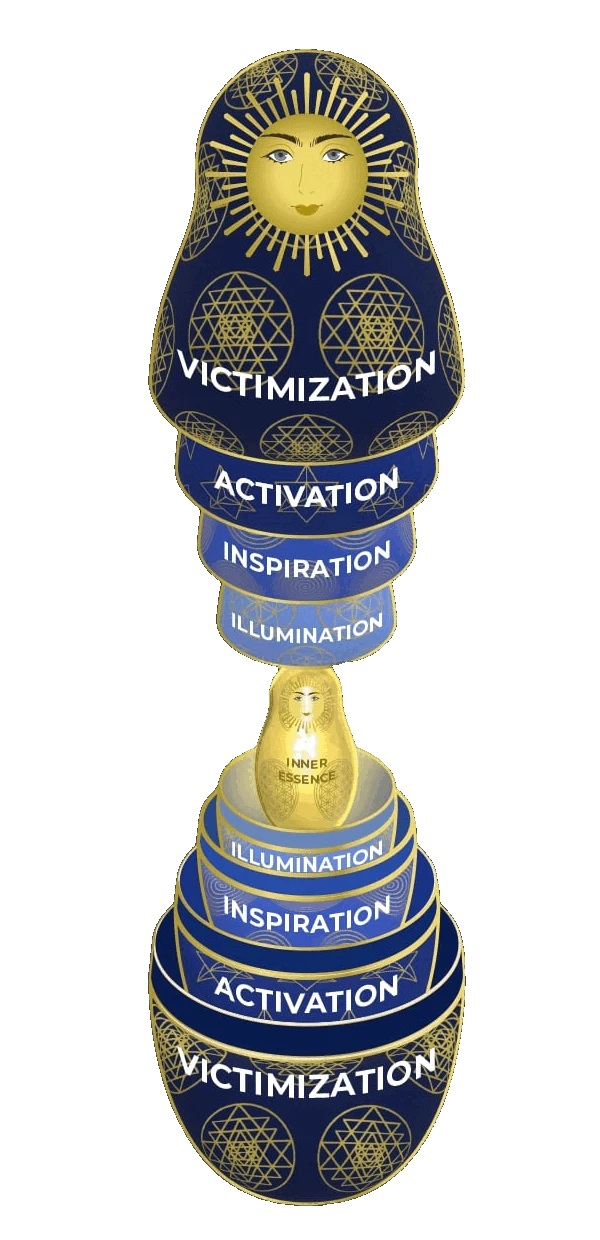
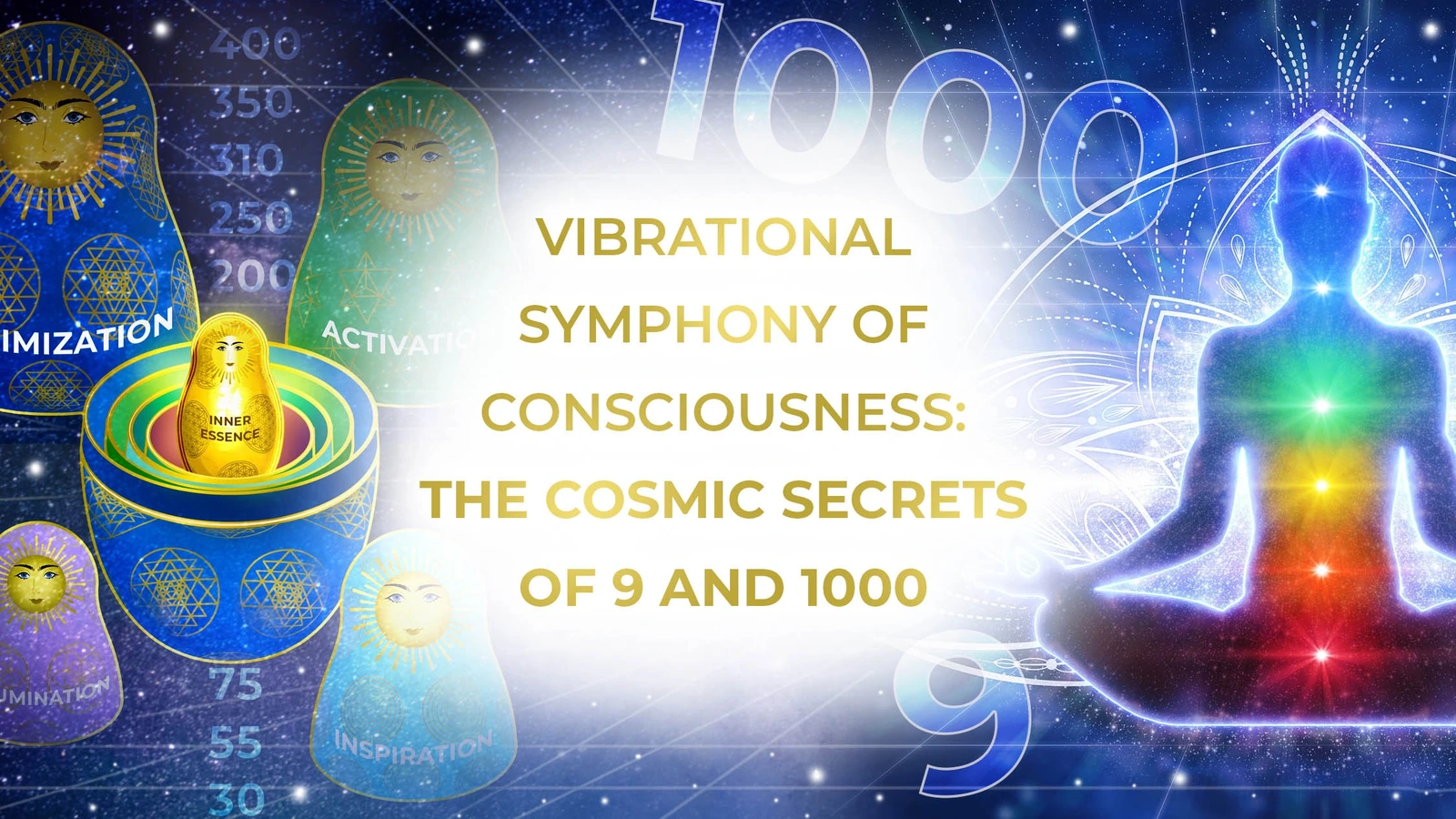
In our work with the Vibrational Frequency Analysis, we see these principles reflected in every reading: where attention and emotion rest, the field follows. Each person carries Inner Essence, 1000 vf on the Frequencies of Awakening, as their deepest nature, and the journey is one of releasing the resistance that veils it. Your Vibrational Frequency Analysis reveals your Frequency Now, your Frequency at Incarnation and at Birth, and the 45 aspects shaping how you create your reality.
The Cosmos Calls
Max Planck saw consciousness as the foundation of all reality. A line often attributed to Rumi says, "You are not a drop in the ocean. You are the entire ocean in a drop." Quantum physics adds its own voice: you are a participant, a thread in the fabric, weaving the universe with every dream, action and exploration.
I once stood beneath a sky ablaze with stars, their glow rising and falling like a quiet breath. In that stillness I felt the cosmos breathing with me, and a question stirred: could I be its voice too? The universe is alive, resonant and intertwined with you. I have felt it, and perhaps you have too, or will, as you listen.

Here is something simple and profound to try. Choose one intention for today, such as peace, courage or wonder, and follow where it leads. Notice how it shapes your moments and ripples outward. You are co-creating, shaping the universe's story with every step.
Take a moment to reflect on the light within you and your place in this grand unity. If you are curious to go further, Fritjof Capra's The Tao of Physics is a beautiful companion.
Are you the key to something greater? Let us discover it together.
This article originally appeared on higherconsciousness.com. The platform version is the canonical edition.